From Kilowatts to Code: Why Home Energy Orchestration Is the Next Energy Platform Opportunity
On 28 February 2026, strikes were launched against Iran. Within days, the Strait of Hormuz, the channel that normally carries around a fifth of the world’s oil and LNG, was effectively closed. Brent crude jumped from roughly $70 a barrel to peaks near $120. UK wholesale gas prices rose by around 75% in under a month.
Because of the lag built into Ofgem’s price cap, households didn’t feel it immediately. However, on 1 July, the cap rose 13%, adding around £220 to a typical dual-fuel bill. It’s not the first time in recent years that UK households have taken a direct hit from a conflict thousands of miles away.
The pattern is structural, not bad luck. The UK imports around a third of its gas and pays the international price for it regardless of where it comes from. Gas-fired generation continues to set the marginal wholesale electricity price for much of the time. So when gas spikes, everything spikes with it, including petrol, heating, and the electricity bill – even for households that never touch a gas boiler.
That structural exposure is exactly why the policy response has settled on the same answer every time: less gas dependency, more decentralised, self-generated power. It’s also why, according to the UK Government, March 2026 saw the highest month of UK solar installations since 2012, taking total UK installations past 2 million. Households have been responding to the same signal as governments.
The home is becoming an energy system
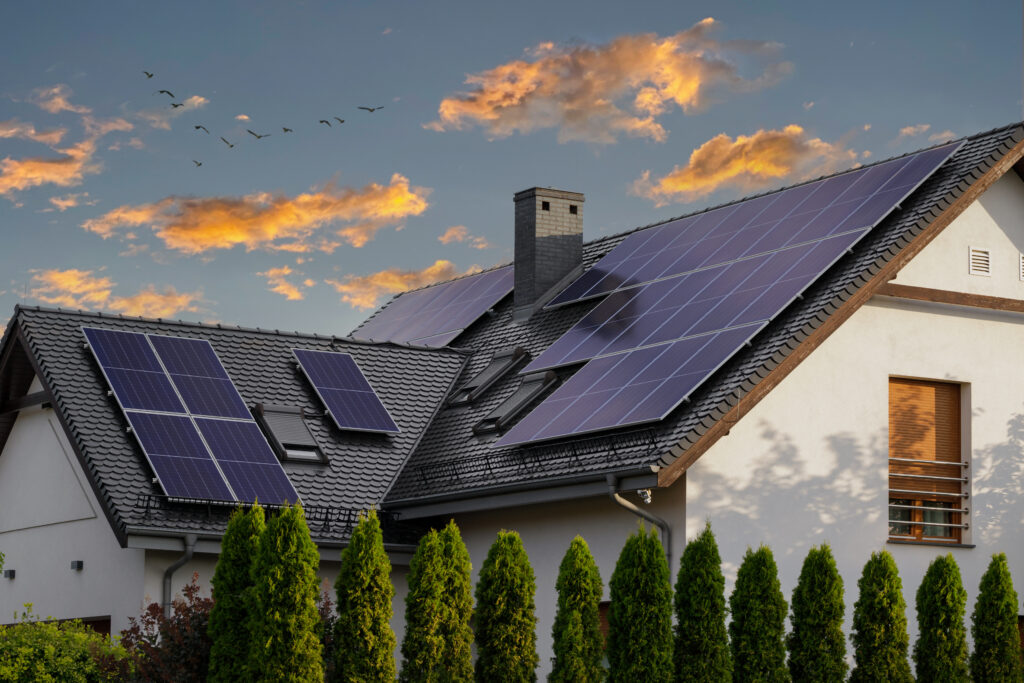
A decade ago, most households were simply consumers of electricity. Today, many generate it, store it, and increasingly decide when to use it. A modern home may run rooftop solar, a battery, an EV charger and a heat pump. Each adds value individually. Together they create complexity. That complexity is increasingly being managed not by the homeowner, but by software. Whoever owns that software layer owns the customer relationship, which is where the real value in this market is starting to sit.
Decentralised generation solves half the problem. The other half is demand-side response, using flexibility, not just generation, to reduce exposure to volatile and expensive grid electricity. For years demand-side response has been framed as a grid-level, industrial-scale story: aggregators, Virtual Power Plants (VPPs) and large commercial sites with half-hourly meters. It’s not where most of the current momentum actually sits.
The more interesting shift is happening inside individual homes. This isn’t a niche behaviour. Battery storage is increasingly being installed alongside new rooftop solar systems. The missing piece isn’t hardware adoption, it’s the software layer that makes that hardware behave as one coordinated system rather than four independent devices.
That’s what’s changing. Home Energy Management Systems (HEMS) are starting to treat solar, storage, heat pumps and EV charging as one coordinated system. The system learns a household’s usage pattern, tracks solar forecasts and wholesale price signals, and makes decisions for now and the coming hours, be they charging the battery when prices are low, running the dishwasher off-peak or using stored solar rather than importing at a price spike.
Interest is already responding to exactly the macro trigger this article opened with. One installer reported website traffic increasing by more than 60% in a single week this spring, as households searched for ways to reduce their exposure to wholesale price volatility and future geopolitical shocks.
Why this matters more than it looks
Data, not hardware, is the key to unlocking efficiency and savings. The panels, batteries and heat pumps have existed for years. What’s new is the ability to model, forecast and act on a household’s energy behaviour in real time, turning static assets into a coordinated, price-responsive system. That is demand-side response, delivered at the smallest possible scale: one house at a time, multiplied across hundreds of thousands of installations.
The market is currently fragmented, but it’s also the kind of market structure that tends to consolidate fast once the underlying demand is proven.
The investment case
For equity investors, home energy orchestration has a set of characteristics worth taking seriously:
It converts hardware into recurring revenue: Solar, batteries and heat pumps are fundamentally commoditised, one-off capex sales. A home orchestration layer on top – whether through subscription fees, share-of-savings, data-driven services – turns a single install into an ongoing customer relationship, with the far better margin profile.
Data is a real moat: Years of half-hourly consumption, battery cycling, weather response and tariff optimisation create proprietary operational datasets that improve forecasting. A platform that has learned this behaviour across thousands of households has a switching-cost advantage that’s genuinely hard to replicate. It’s the same defensibility thesis that has made VPP and Distributed Energy Resource aggregator platforms attractive at grid scale, just pushed down to a household level with a far larger addressable base.
Fragmentation is the opportunity, not just the risk: A market of closed, vendor-specific platforms is a textbook setup for consolidation: bringing together regional installers and software providers, standardising the technology layer and building a scaled platform with characteristics that strategic buyers and investors have historically been willing to value at a premium. But consolidation is only one route to value creation. Equally compelling are independent software platforms that establish themselves as the orchestration layer across a growing installer ecosystem. Through selective acquisitions, channel partnerships and expanding customer adoption, these businesses have the potential to scale rapidly, build large bases of recurring software revenue and become valuable platforms in their own right.
The tailwind is structural, not cyclical: Falling battery costs and rising heat pump and EV adoption push households toward orchestration regardless of any single year’s energy prices. That matters, because an investment thesis built purely on “prices are high right now” is not a strong one. As adoption increases, so too does the stickiness of customers and revenues.
The bigger picture
Every time a conflict thousands of miles away pushes up a UK household’s bill, the underlying lesson is the same one being learned by governments and increasingly by consumers: import less, generate more, and use what you have more intelligently. Data is what makes the third part possible. Households that once represented the end of the grid are becoming active participants within it and the platforms coordinating that behaviour may prove to be some of the most valuable assets created during the energy transition.

Justin McKeegan
Director
Why HMT

Passionate
We are passionate about delivering an optimal outcome for our clients and helping them achieve their personal objectives. We understand entrepreneurial businesses because we are one
Our Deals
Personal
Partners are supported by high-calibre professional staff who share our core values of enthusiasm, energy, entrepreneurialism and empathy to our client’s objectives
Our Team
Proven
Our Partners have unparalleled deal experience in the mid-market and are supported by a team of dedicated deal-doers with specialist capabilities and experience
Our Awards
Connected
We have an extensive network of acquisitive corporates, institutional investors and debt providers both in the UK and internationally through our membership of our global network Cognos
Our NetworkLatest News