The UK’s automotive repair (AutoRepair) market is in the middle of a structural transformation. Historically, the market has been characterised by thousands of independently owned bodyshops serving local markets. Since 2021, the sector has been consolidating into a smaller number of professionally managed, tech-enabled repair groups backed by private equity investors. What was once viewed as a fragmented trade industry has evolved into an attractive platform investment opportunity, attracting significant financial sponsor interest and generating M&A activity over the past decade.
ccording to market research, the UK’s wider auto service market was valued at USD 31.7 billion in 2025, and is projected to grow to USD 55 billion by 2035, which is a CAGR of 5.6% for the forecast period 2025 to 2035. The UK’s autorepair market represents one of the largest and most resilient segments of the automotive aftermarket, generating an estimated USD 9.2 billion to USD 11.9 billion of annual revenues across collision repair, mechanical repair, servicing and related vehicle restoration activities. Within the UK’s autorepair market, accident repair is estimated to account for more than USD 6.6 billion of annual expenditure, supported by approximately 30 million insured vehicles on UK roads and more than 1.5 million motor insurance claims each year.
At first glance, the UK’s autorepair market is an unlikely option for private equity activity. Despite its size, the sector remains highly fragmented, operationally complex and is often localised. While a small number of large multi-site operators have emerged over the past decade, the majority of the UK’s (approx.) 3,500 – 4,000 bodyshops remain independently owned. Compared to many other business services sectors that have already undergone significant consolidation, the fragmentation of the market has created an attractive environment for private equity-backed buy-and-build strategies.
The sector’s investment appeal is underpinned by several characteristics:
Average repair costs have risen substantially as modern vehicles increasingly incorporate advanced driver assistance systems (ADAS), cameras, radar sensors, lightweight materials and complex electronic architectures that require specialist repair processes and recalibration.
Demand for vehicle repair remains largely non-discretionary, which provides resilience across economic cycles.
The average age of the UK ‘vehicle parc’ has continued to rise and now exceeds nine years, which supports sustained demand for repair and maintenance services.
Insurance claims inflation has increased significantly in recent years, driven by higher labour costs, parts inflation, supply chain disruption and growing vehicle complexity.
These technological developments are fundamentally reshaping the economics of the UK’s AutoRepair market. For example, a repair business that once required relatively modest capital investment, must now invest heavily into diagnostics, Electrical Vehicle (EV) safety infrastructure, technician training and manufacturer-specific tooling. Consequently, Original Equipment Manufacturer (OEM) certification programmes have become increasingly important, especially when it comes to premium vehicle brands and creating significant barriers to entry.
The interaction between insurers, repair networks, fleet operators and vehicle manufacturers is creating new competitive dynamics, while ongoing consolidation is reshaping ownership structures across the UK’s AutoRepair market. For investors, operators and strategic acquirers, understanding the forces at play is essential when assessing the next phase of growth and M&A activity within the sector.
The UK’s AutoRepair Market: Key Players and Deal Activity
The UK’s AutoRepair market has entered a period of sustained consolidation, driven by the emergence of a number of well-capitalised repair groups that are reshaping what has historically been one of the most fragmented segments of the automotive aftermarket. Despite there having been active private equity consolidation over the last five years, the vast majority of operators across the UK remain independently owned, are single-site businesses and generate revenues below USD 6.8 million. Although the market still comprises around 3,500 bodyshops, ownership is increasingly concentrated in the hands of a small number of national and regional multi-site operators (MSOs).
This consolidation reflects a fundamental shift in the industry’s economics. In the past, competitive advantage was largely determined by local reputation, relationships with insurers and technical craftsmanship. In today’s market, success is increasingly defined by scale, technology investment, accreditations and the ability to service national insurance, fleet and OEM contracts. Consequently, larger repair groups have pursued aggressive acquisition strategies, acquiring independent operators to expand geographic coverage, increase repair capacity and strengthen specialist capabilities such as EV repair, aluminium repair and ADAS calibration. […]
Trends and Shifts in the UK’s AutoRepair Market
The UK’s AutoRepair market is being reshaped by a series of structural trends that are radically changing how repair businesses compete, which is creating a strong rationale for continued M&A activity. Increasing vehicle complexity, evolving insurer requirements, manufacturer oversight, labour constraints and the transition to EVs are all raising barriers to entry and favouring larger, well-capitalised operators.
Technology investment
echnology investment has quickly become one of the most significant factors influencing mergers and acquisitions within the UK’s AutoRepair market. Modern vehicles increasingly incorporate advanced driver assistance systems (ADAS), cameras, radar sensors, lightweight materials and sophisticated onboard software that require specialist repair techniques and post-repair calibration. As a result, repair businesses will need to invest in diagnostic equipment, calibration technology, digital estimating platforms and workshop management systems to remain competitive.
In addition to workshop technology, insurers increasingly expect their repair partners to have the means to provide real-time repair tracking, digital claims integration and enhanced customer communication platforms. Such investments require significant capital expenditure and tend to favour larger repair groups that can spread technology costs across more than one site. For many of the smaller independent operators, this scale of investment has become more and more difficult to justify, making acquisition by larger platforms and attractive strategic option.
Insurance concentration
Insurance concentration in the UK’s automotive repair market refers to the significant influence that a relatively small number of insurance companies and accident management firms have over where and how collision repairs are carried out. Following an accident, insurers often direct policyholders to approved repair networks, which consist of bodyshops that have agreed to specific pricing, service and performance requirements. The result is that a large proportion of vehicle repair work is channelled through a limited number of insurer-controlled networks rather than being freely distributed across the wider repair sector. Although this approach can deliver efficiencies, faster claims handling and standardised service levels for customers, it also increases the bargaining power of insurers relative to independent repairers.
For AutoRepair businesses, insurance concentration can create both opportunities and challenges. Securing insurer-approved status can provide a reliable flow of work, but it may also require investment in equipment, training, compliance and reporting systems. In addition, repairers operating within insurer networks often face pressure on labour rates and repair margins, as insurers seek to manage increasing repair costs associated with increasingly complex vehicle technologies. However, smaller independent bodyshops that are unable or unwilling to participate in insurer networks may find it more difficult to access accident repair work. At the same time, the growing complexity of modern vehicles has contributed to capacity constraints within approved networks, prompting debate about whether excessive concentration could reduce flexibility and consumer choice in the long term.
OEM approvals
Original Equipment Manufacturer (OEM) approvals have become an increasingly important feature of the UK’s automotive repair market. OEM approval programmes are established by vehicle manufacturers to ensure that repairs are carried out in accordance with their technical standards, using approved methods, equipment and especially trained technicians. Repairers that achieve OEM approval are authorised to repair specific vehicle brands and are regularly audited to maintain compliance with manufacturer requirements.
The growth of OEM approvals has been driven by the increasing complexity of modern vehicles. Advanced materials and sophisticated driver assistance systems (ADAS) require specialised repair procedures that may differ from traditional body repair methods. Manufacturers have responded by creating approved repair networks to help ensure vehicle safety, performance and warranty requirements are maintained following a collision repair.
Private Equity investment
Private equity has become one of the main drivers of consolidation within the UK’s AutoRepair market. This is because investors have recognised that the sector combines resilient, non-discretionary demand with a highly fragmented ownership structure, creating favourable conditions for buy-and-build strategies. The examples outlined in this white paper, such as Steer Automotive Group, The Vella Group and Revive! demonstrate the variety of investment opportunities available, ranging from collision repair platforms, to asset-light franchise networks.
Beyond simple consolidation, private equity investors are increasingly supporting investments in technology, technician development, operational efficiency and geographic expansion. As businesses grow and become more sophisticated, they are able to secure stronger insurer relationships, negotiate improved supplier terms and pursue higher-value OEM programmes. The combination of operational improvement and acquisition-led growth continues to attract both domestic and international investors, suggesting that M&A activity is likely to remain robust over the medium term.
Labour and skills shortages
The availability of skilled technicians has become a significant constraint on growth across the AutoRepair industry. Demand for qualified panel technicians, paint specialists, MET technicians and diagnostic experts continues to exceed the supply. At the same time, apprenticeship numbers have struggled to keep pace with increasing industry requirements. The Institute of the Motor Industry estimates that around 16,000 automotive roles remain unfilled across the sector, with particularly notable shortages in body repair and paint disciplines.
These labour shortages have important strategic implications. Limited technician availability restricts repair capacity, extends repair cycle times and increases labour costs. In response, larger repair groups have established internal training academies, apprenticeship programmes and structured career development pathways, which allows them to attract and retain skilled employees more effectively than smaller independent businesses. As labour remains one of the industry’s scarcest resources, access to talent is becoming a key source of competitive advantage.
EV transition
The transition to electric vehicles represents one of the most transformative long-term trends that is impacting the automotive repair sector. While EVs generally require less routine mechanical servicing, collision repairs have become considerably more complex due to high-voltage battery systems, integrated electronics and increasingly sophisticated software architectures. Even relatively minor collisions can require diagnostics, structural assessments and extensive system recalibration. As a result, repairing EVs demands significant investment in specialist facilities, technician accreditation and safety procedures. These requirements increase capital intensity and further widen the competitive gap between large, well-funded repair groups and smaller independents. At the same time, manufacturers are exercising greater control over EV repair standards through approved repair networks, making OEM certifications increasingly valuable. As EV adoption accelerates over the coming decade, businesses that invest early in technical capability and manufacturer relationships are likely to be best positioned to capture further market growth, while those unable to make the necessary investments may become candidates for consolidation. […]
To receive a full copy of the white paper, please email Melissa Dainelli at [email protected].
The UK’s automotive repair (AutoRepair) market is in the middle of a structural transformation. Historically, the market has been characterised by thousands of independently owned bodyshops serving local markets. Since 2021, the sector has been consolidating into a smaller number of professionally managed, tech-enabled repair groups backed by private equity investors. What was once viewed as a fragmented trade industry has evolved into an attractive platform investment opportunity, attracting significant financial sponsor interest and generating M&A activity over the past decade.
ccording to market research, the UK’s wider auto service market was valued at USD 31.7 billion in 2025, and is projected to grow to USD 55 billion by 2035, which is a CAGR of 5.6% for the forecast period 2025 to 2035. The UK’s autorepair market represents one of the largest and most resilient segments of the automotive aftermarket, generating an estimated USD 9.2 billion to USD 11.9 billion of annual revenues across collision repair, mechanical repair, servicing and related vehicle restoration activities. Within the UK’s autorepair market, accident repair is estimated to account for more than USD 6.6 billion of annual expenditure, supported by approximately 30 million insured vehicles on UK roads and more than 1.5 million motor insurance claims each year.
At first glance, the UK’s autorepair market is an unlikely option for private equity activity. Despite its size, the sector remains highly fragmented, operationally complex and is often localised. While a small number of large multi-site operators have emerged over the past decade, the majority of the UK’s (approx.) 3,500 – 4,000 bodyshops remain independently owned. Compared to many other business services sectors that have already undergone significant consolidation, the fragmentation of the market has created an attractive environment for private equity-backed buy-and-build strategies.
The sector’s investment appeal is underpinned by several characteristics:
Average repair costs have risen substantially as modern vehicles increasingly incorporate advanced driver assistance systems (ADAS), cameras, radar sensors, lightweight materials and complex electronic architectures that require specialist repair processes and recalibration.
Demand for vehicle repair remains largely non-discretionary, which provides resilience across economic cycles.
The average age of the UK ‘vehicle parc’ has continued to rise and now exceeds nine years, which supports sustained demand for repair and maintenance services.
Insurance claims inflation has increased significantly in recent years, driven by higher labour costs, parts inflation, supply chain disruption and growing vehicle complexity.
These technological developments are fundamentally reshaping the economics of the UK’s AutoRepair market. For example, a repair business that once required relatively modest capital investment, must now invest heavily into diagnostics, Electrical Vehicle (EV) safety infrastructure, technician training and manufacturer-specific tooling. Consequently, Original Equipment Manufacturer (OEM) certification programmes have become increasingly important, especially when it comes to premium vehicle brands and creating significant barriers to entry.
The interaction between insurers, repair networks, fleet operators and vehicle manufacturers is creating new competitive dynamics, while ongoing consolidation is reshaping ownership structures across the UK’s AutoRepair market. For investors, operators and strategic acquirers, understanding the forces at play is essential when assessing the next phase of growth and M&A activity within the sector.
The UK’s AutoRepair Market: Key Players and Deal Activity
The UK’s AutoRepair market has entered a period of sustained consolidation, driven by the emergence of a number of well-capitalised repair groups that are reshaping what has historically been one of the most fragmented segments of the automotive aftermarket. Despite there having been active private equity consolidation over the last five years, the vast majority of operators across the UK remain independently owned, are single-site businesses and generate revenues below USD 6.8 million. Although the market still comprises around 3,500 bodyshops, ownership is increasingly concentrated in the hands of a small number of national and regional multi-site operators (MSOs).
This consolidation reflects a fundamental shift in the industry’s economics. In the past, competitive advantage was largely determined by local reputation, relationships with insurers and technical craftsmanship. In today’s market, success is increasingly defined by scale, technology investment, accreditations and the ability to service national insurance, fleet and OEM contracts. Consequently, larger repair groups have pursued aggressive acquisition strategies, acquiring independent operators to expand geographic coverage, increase repair capacity and strengthen specialist capabilities such as EV repair, aluminium repair and ADAS calibration. […]
Trends and Shifts in the UK’s AutoRepair Market
The UK’s AutoRepair market is being reshaped by a series of structural trends that are radically changing how repair businesses compete, which is creating a strong rationale for continued M&A activity. Increasing vehicle complexity, evolving insurer requirements, manufacturer oversight, labour constraints and the transition to EVs are all raising barriers to entry and favouring larger, well-capitalised operators.
Technology investment
echnology investment has quickly become one of the most significant factors influencing mergers and acquisitions within the UK’s AutoRepair market. Modern vehicles increasingly incorporate advanced driver assistance systems (ADAS), cameras, radar sensors, lightweight materials and sophisticated onboard software that require specialist repair techniques and post-repair calibration. As a result, repair businesses will need to invest in diagnostic equipment, calibration technology, digital estimating platforms and workshop management systems to remain competitive.
In addition to workshop technology, insurers increasingly expect their repair partners to have the means to provide real-time repair tracking, digital claims integration and enhanced customer communication platforms. Such investments require significant capital expenditure and tend to favour larger repair groups that can spread technology costs across more than one site. For many of the smaller independent operators, this scale of investment has become more and more difficult to justify, making acquisition by larger platforms and attractive strategic option.
Insurance concentration
Insurance concentration in the UK’s automotive repair market refers to the significant influence that a relatively small number of insurance companies and accident management firms have over where and how collision repairs are carried out. Following an accident, insurers often direct policyholders to approved repair networks, which consist of bodyshops that have agreed to specific pricing, service and performance requirements. The result is that a large proportion of vehicle repair work is channelled through a limited number of insurer-controlled networks rather than being freely distributed across the wider repair sector. Although this approach can deliver efficiencies, faster claims handling and standardised service levels for customers, it also increases the bargaining power of insurers relative to independent repairers.
For AutoRepair businesses, insurance concentration can create both opportunities and challenges. Securing insurer-approved status can provide a reliable flow of work, but it may also require investment in equipment, training, compliance and reporting systems. In addition, repairers operating within insurer networks often face pressure on labour rates and repair margins, as insurers seek to manage increasing repair costs associated with increasingly complex vehicle technologies. However, smaller independent bodyshops that are unable or unwilling to participate in insurer networks may find it more difficult to access accident repair work. At the same time, the growing complexity of modern vehicles has contributed to capacity constraints within approved networks, prompting debate about whether excessive concentration could reduce flexibility and consumer choice in the long term.
OEM approvals
Original Equipment Manufacturer (OEM) approvals have become an increasingly important feature of the UK’s automotive repair market. OEM approval programmes are established by vehicle manufacturers to ensure that repairs are carried out in accordance with their technical standards, using approved methods, equipment and especially trained technicians. Repairers that achieve OEM approval are authorised to repair specific vehicle brands and are regularly audited to maintain compliance with manufacturer requirements.
The growth of OEM approvals has been driven by the increasing complexity of modern vehicles. Advanced materials and sophisticated driver assistance systems (ADAS) require specialised repair procedures that may differ from traditional body repair methods. Manufacturers have responded by creating approved repair networks to help ensure vehicle safety, performance and warranty requirements are maintained following a collision repair.
Private Equity investment
Private equity has become one of the main drivers of consolidation within the UK’s AutoRepair market. This is because investors have recognised that the sector combines resilient, non-discretionary demand with a highly fragmented ownership structure, creating favourable conditions for buy-and-build strategies. The examples outlined in this white paper, such as Steer Automotive Group, The Vella Group and Revive! demonstrate the variety of investment opportunities available, ranging from collision repair platforms, to asset-light franchise networks.
Beyond simple consolidation, private equity investors are increasingly supporting investments in technology, technician development, operational efficiency and geographic expansion. As businesses grow and become more sophisticated, they are able to secure stronger insurer relationships, negotiate improved supplier terms and pursue higher-value OEM programmes. The combination of operational improvement and acquisition-led growth continues to attract both domestic and international investors, suggesting that M&A activity is likely to remain robust over the medium term.
Labour and skills shortages
The availability of skilled technicians has become a significant constraint on growth across the AutoRepair industry. Demand for qualified panel technicians, paint specialists, MET technicians and diagnostic experts continues to exceed the supply. At the same time, apprenticeship numbers have struggled to keep pace with increasing industry requirements. The Institute of the Motor Industry estimates that around 16,000 automotive roles remain unfilled across the sector, with particularly notable shortages in body repair and paint disciplines.
These labour shortages have important strategic implications. Limited technician availability restricts repair capacity, extends repair cycle times and increases labour costs. In response, larger repair groups have established internal training academies, apprenticeship programmes and structured career development pathways, which allows them to attract and retain skilled employees more effectively than smaller independent businesses. As labour remains one of the industry’s scarcest resources, access to talent is becoming a key source of competitive advantage.
EV transition
The transition to electric vehicles represents one of the most transformative long-term trends that is impacting the automotive repair sector. While EVs generally require less routine mechanical servicing, collision repairs have become considerably more complex due to high-voltage battery systems, integrated electronics and increasingly sophisticated software architectures. Even relatively minor collisions can require diagnostics, structural assessments and extensive system recalibration. As a result, repairing EVs demands significant investment in specialist facilities, technician accreditation and safety procedures. These requirements increase capital intensity and further widen the competitive gap between large, well-funded repair groups and smaller independents. At the same time, manufacturers are exercising greater control over EV repair standards through approved repair networks, making OEM certifications increasingly valuable. As EV adoption accelerates over the coming decade, businesses that invest early in technical capability and manufacturer relationships are likely to be best positioned to capture further market growth, while those unable to make the necessary investments may become candidates for consolidation. […]
To receive a full copy of the white paper, please email Melissa Dainelli at [email protected].
On 28 February 2026, strikes were launched against Iran. Within days, the Strait of Hormuz, the channel that normally carries around a fifth of the world’s oil and LNG, was effectively closed. Brent crude jumped from roughly $70 a barrel to peaks near $120. UK wholesale gas prices rose by around 75% in under a month.
Because of the lag built into Ofgem’s price cap, households didn’t feel it immediately. However, on 1 July, the cap rose 13%, adding around £220 to a typical dual-fuel bill. It’s not the first time in recent years that UK households have taken a direct hit from a conflict thousands of miles away.
The pattern is structural, not bad luck. The UK imports around a third of its gas and pays the international price for it regardless of where it comes from. Gas-fired generation continues to set the marginal wholesale electricity price for much of the time. So when gas spikes, everything spikes with it, including petrol, heating, and the electricity bill – even for households that never touch a gas boiler.
That structural exposure is exactly why the policy response has settled on the same answer every time: less gas dependency, more decentralised, self-generated power. It’s also why, according to the UK Government, March 2026 saw the highest month of UK solar installations since 2012, taking total UK installations past 2 million. Households have been responding to the same signal as governments.
The home is becoming an energy system
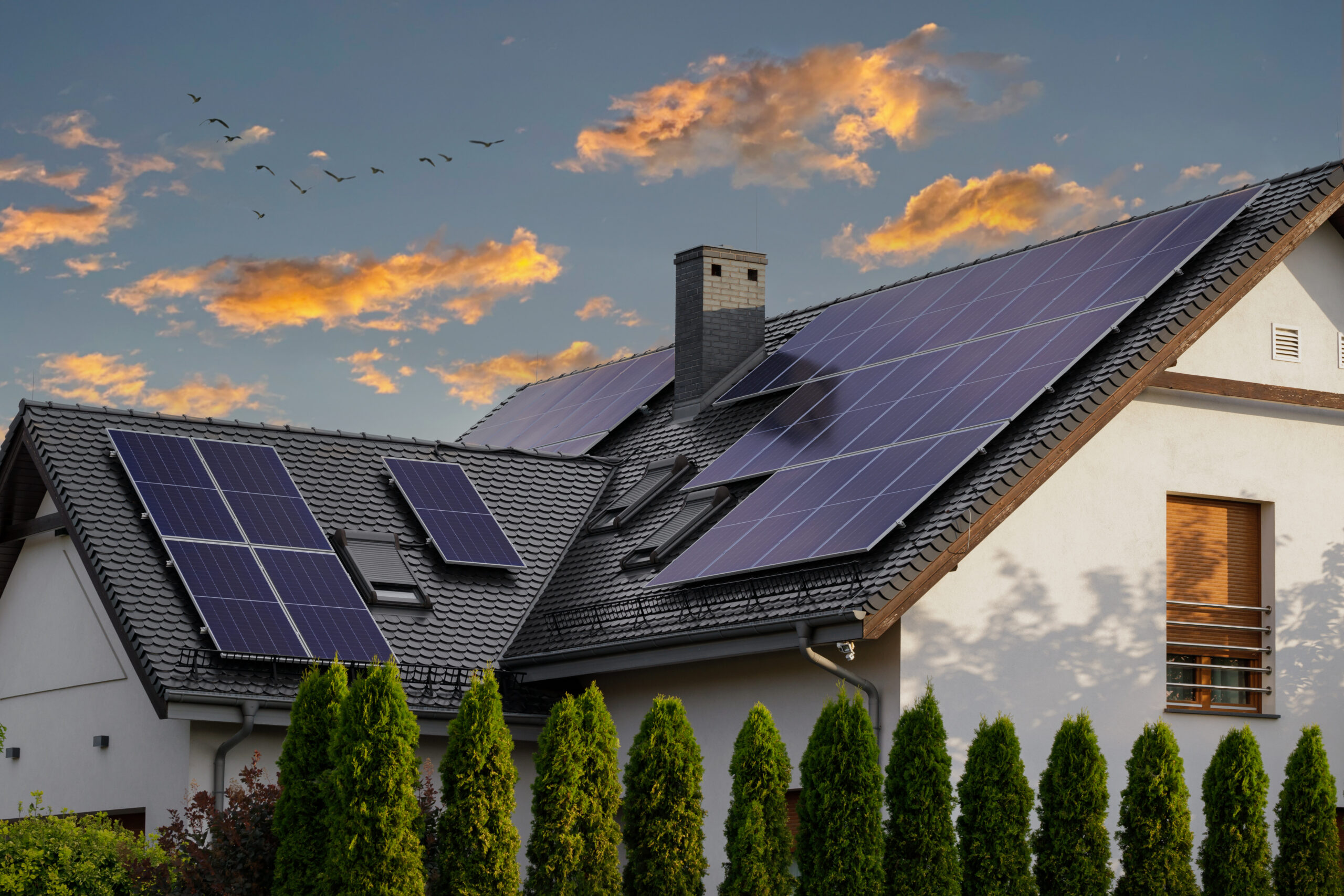
A decade ago, most households were simply consumers of electricity. Today, many generate it, store it, and increasingly decide when to use it. A modern home may run rooftop solar, a battery, an EV charger and a heat pump. Each adds value individually. Together they create complexity. That complexity is increasingly being managed not by the homeowner, but by software. Whoever owns that software layer owns the customer relationship, which is where the real value in this market is starting to sit.
Decentralised generation solves half the problem. The other half is demand-side response, using flexibility, not just generation, to reduce exposure to volatile and expensive grid electricity. For years demand-side response has been framed as a grid-level, industrial-scale story: aggregators, Virtual Power Plants (VPPs) and large commercial sites with half-hourly meters. It’s not where most of the current momentum actually sits.
The more interesting shift is happening inside individual homes. This isn’t a niche behaviour. Battery storage is increasingly being installed alongside new rooftop solar systems. The missing piece isn’t hardware adoption, it’s the software layer that makes that hardware behave as one coordinated system rather than four independent devices.
That’s what’s changing. Home Energy Management Systems (HEMS) are starting to treat solar, storage, heat pumps and EV charging as one coordinated system. The system learns a household’s usage pattern, tracks solar forecasts and wholesale price signals, and makes decisions for now and the coming hours, be they charging the battery when prices are low, running the dishwasher off-peak or using stored solar rather than importing at a price spike.
Interest is already responding to exactly the macro trigger this article opened with. One installer reported website traffic increasing by more than 60% in a single week this spring, as households searched for ways to reduce their exposure to wholesale price volatility and future geopolitical shocks.
Why this matters more than it looks
Data, not hardware, is the key to unlocking efficiency and savings. The panels, batteries and heat pumps have existed for years. What’s new is the ability to model, forecast and act on a household’s energy behaviour in real time, turning static assets into a coordinated, price-responsive system. That is demand-side response, delivered at the smallest possible scale: one house at a time, multiplied across hundreds of thousands of installations.
The market is currently fragmented, but it’s also the kind of market structure that tends to consolidate fast once the underlying demand is proven.
The investment case
For equity investors, home energy orchestration has a set of characteristics worth taking seriously:
It converts hardware into recurring revenue: Solar, batteries and heat pumps are fundamentally commoditised, one-off capex sales. A home orchestration layer on top – whether through subscription fees, share-of-savings, data-driven services – turns a single install into an ongoing customer relationship, with the far better margin profile.
Data is a real moat: Years of half-hourly consumption, battery cycling, weather response and tariff optimisation create proprietary operational datasets that improve forecasting. A platform that has learned this behaviour across thousands of households has a switching-cost advantage that’s genuinely hard to replicate. It’s the same defensibility thesis that has made VPP and Distributed Energy Resource aggregator platforms attractive at grid scale, just pushed down to a household level with a far larger addressable base.
Fragmentation is the opportunity, not just the risk: A market of closed, vendor-specific platforms is a textbook setup for consolidation: bringing together regional installers and software providers, standardising the technology layer and building a scaled platform with characteristics that strategic buyers and investors have historically been willing to value at a premium. But consolidation is only one route to value creation. Equally compelling are independent software platforms that establish themselves as the orchestration layer across a growing installer ecosystem. Through selective acquisitions, channel partnerships and expanding customer adoption, these businesses have the potential to scale rapidly, build large bases of recurring software revenue and become valuable platforms in their own right.
The tailwind is structural, not cyclical: Falling battery costs and rising heat pump and EV adoption push households toward orchestration regardless of any single year’s energy prices. That matters, because an investment thesis built purely on “prices are high right now” is not a strong one. As adoption increases, so too does the stickiness of customers and revenues.
The bigger picture
Every time a conflict thousands of miles away pushes up a UK household’s bill, the underlying lesson is the same one being learned by governments and increasingly by consumers: import less, generate more, and use what you have more intelligently. Data is what makes the third part possible. Households that once represented the end of the grid are becoming active participants within it and the platforms coordinating that behaviour may prove to be some of the most valuable assets created during the energy transition.
On 28 February 2026, strikes were launched against Iran. Within days, the Strait of Hormuz, the channel that normally carries around a fifth of the world’s oil and LNG, was effectively closed. Brent crude jumped from roughly $70 a barrel to peaks near $120. UK wholesale gas prices rose by around 75% in under a month.
Because of the lag built into Ofgem’s price cap, households didn’t feel it immediately. However, on 1 July, the cap rose 13%, adding around £220 to a typical dual-fuel bill. It’s not the first time in recent years that UK households have taken a direct hit from a conflict thousands of miles away.
The pattern is structural, not bad luck. The UK imports around a third of its gas and pays the international price for it regardless of where it comes from. Gas-fired generation continues to set the marginal wholesale electricity price for much of the time. So when gas spikes, everything spikes with it, including petrol, heating, and the electricity bill – even for households that never touch a gas boiler.
That structural exposure is exactly why the policy response has settled on the same answer every time: less gas dependency, more decentralised, self-generated power. It’s also why, according to the UK Government, March 2026 saw the highest month of UK solar installations since 2012, taking total UK installations past 2 million. Households have been responding to the same signal as governments.
The home is becoming an energy system
A decade ago, most households were simply consumers of electricity. Today, many generate it, store it, and increasingly decide when to use it. A modern home may run rooftop solar, a battery, an EV charger and a heat pump. Each adds value individually. Together they create complexity. That complexity is increasingly being managed not by the homeowner, but by software. Whoever owns that software layer owns the customer relationship, which is where the real value in this market is starting to sit.
Decentralised generation solves half the problem. The other half is demand-side response, using flexibility, not just generation, to reduce exposure to volatile and expensive grid electricity. For years demand-side response has been framed as a grid-level, industrial-scale story: aggregators, Virtual Power Plants (VPPs) and large commercial sites with half-hourly meters. It’s not where most of the current momentum actually sits.
The more interesting shift is happening inside individual homes. This isn’t a niche behaviour. Battery storage is increasingly being installed alongside new rooftop solar systems. The missing piece isn’t hardware adoption, it’s the software layer that makes that hardware behave as one coordinated system rather than four independent devices.
That’s what’s changing. Home Energy Management Systems (HEMS) are starting to treat solar, storage, heat pumps and EV charging as one coordinated system. The system learns a household’s usage pattern, tracks solar forecasts and wholesale price signals, and makes decisions for now and the coming hours, be they charging the battery when prices are low, running the dishwasher off-peak or using stored solar rather than importing at a price spike.
Interest is already responding to exactly the macro trigger this article opened with. One installer reported website traffic increasing by more than 60% in a single week this spring, as households searched for ways to reduce their exposure to wholesale price volatility and future geopolitical shocks.
Why this matters more than it looks
Data, not hardware, is the key to unlocking efficiency and savings. The panels, batteries and heat pumps have existed for years. What’s new is the ability to model, forecast and act on a household’s energy behaviour in real time, turning static assets into a coordinated, price-responsive system. That is demand-side response, delivered at the smallest possible scale: one house at a time, multiplied across hundreds of thousands of installations.
The market is currently fragmented, but it’s also the kind of market structure that tends to consolidate fast once the underlying demand is proven.
The investment case
For equity investors, home energy orchestration has a set of characteristics worth taking seriously:
It converts hardware into recurring revenue: Solar, batteries and heat pumps are fundamentally commoditised, one-off capex sales. A home orchestration layer on top – whether through subscription fees, share-of-savings, data-driven services – turns a single install into an ongoing customer relationship, with the far better margin profile.
Data is a real moat: Years of half-hourly consumption, battery cycling, weather response and tariff optimisation create proprietary operational datasets that improve forecasting. A platform that has learned this behaviour across thousands of households has a switching-cost advantage that’s genuinely hard to replicate. It’s the same defensibility thesis that has made VPP and Distributed Energy Resource aggregator platforms attractive at grid scale, just pushed down to a household level with a far larger addressable base.
Fragmentation is the opportunity, not just the risk: A market of closed, vendor-specific platforms is a textbook setup for consolidation: bringing together regional installers and software providers, standardising the technology layer and building a scaled platform with characteristics that strategic buyers and investors have historically been willing to value at a premium. But consolidation is only one route to value creation. Equally compelling are independent software platforms that establish themselves as the orchestration layer across a growing installer ecosystem. Through selective acquisitions, channel partnerships and expanding customer adoption, these businesses have the potential to scale rapidly, build large bases of recurring software revenue and become valuable platforms in their own right.
The tailwind is structural, not cyclical: Falling battery costs and rising heat pump and EV adoption push households toward orchestration regardless of any single year’s energy prices. That matters, because an investment thesis built purely on “prices are high right now” is not a strong one. As adoption increases, so too does the stickiness of customers and revenues.
The bigger picture
Every time a conflict thousands of miles away pushes up a UK household’s bill, the underlying lesson is the same one being learned by governments and increasingly by consumers: import less, generate more, and use what you have more intelligently. Data is what makes the third part possible. Households that once represented the end of the grid are becoming active participants within it and the platforms coordinating that behaviour may prove to be some of the most valuable assets created during the energy transition.